Friday, October 19, 2007

Into thin air: Altitude's toll on the brain


Introduction

by David Dobbs

Editor, Mind Matters

"The mountains," wrote climbing enthusiast Sir Francis Younghusband, "reserve their choice gifts for those who stand upon their summits." Yet those who earn these gifts pay a unique price. As neuroscientist and weekend climber R. Douglas Fields relates below, a recent study used brain scans to examine both the effects that both one-time and cumulative high-altitude climbing have on the human brain. The findings are not elevating for those of us who love to climb.

_____

Brain Cells into Thin Air

by

R. Douglas Fields

National Institutes of Mental Health

Washington, D.C.


"Mount Everest is very easy to climb, only just a little too high." - The Observer, Jan 25, 1953.

Three attributes of a good mountaineer are high pain threshold, bad memory, and ... I forget the third. - R. Douglas Fields

Climbing Mount Everest is not so difficult; the hard part is getting down intact. According to a recent brain imaging study, almost no one does. Of thirteen climbers in the study who attempted Mount Everest, none returned without brain damage. The study also scanned the brains of climbers who attempted less extreme summits. For those Next............

Finding a Voice in the Face of Aphasia: Using Personal Storytelling to Reconstruct Self

FAYETTEVILLE, Ark. - Lessons learned in a communication group at the University of Arkansas offer people with serious communication problems a way to redefine who they are on their own terms.

When stroke or disease damages the ability to understand or use language - a condition known as aphasia - more is lost than words and sentences. Since people express who they are through conversation and other communication, aphasia can mean a loss of self, what University of Arkansas researcher Barbara B. Shadden has called "identity theft."

Shadden and sociologist Patricia R. Koski have applied sociological theory to illuminate the process of a communication group for people with aphasia. An article about the results of the group, "Social Construction of Self for Persons with Aphasia: When Language as a Cultural Tool is Impaired," appears in a recent issue of the Journal of Medical Speech Language Pathology.

Theorists in a number of disciplines agree that "language, talk and communication are critical elements of the ongoing construction of self," the researchers wrote. When people with aphasia are involved with the medical system, their role as patients reshapes their life stories. Often they begin to see themselves as powerless, incompetent and socially marginal.

"The way you create yourself is that you tell a story," Koski said. "Think of how you present yourself to other people. You tell a story. It's not just a presentation of self - it's a creation of self."

"But if something happens to that communication tool that lets you tell that story," Shadden said, "then how do you do it? How do you create yourself? What do you do if your tool has failed you and others don't know who you are?"

In 2004, a communication group was created at the University of Arkansas Speech and Hearing Clinic as a way of "transforming communication strategies learned in individual therapy into a broader social context." While communications professionals in the group facilitated discussion, everyone participated on an equal footing, which created very different relationships than are typically seen with the medical model.

"The medical model is a very comfortable model," Koski said. "There's you the professional, and there's that other person the client. You treat the client. You have power, you are separate, and you don't have to take a risk. This support group was based on the assumption that there was fundamentally no power difference."

Shadden had always taught her clinical students that they were dealing with a person first and a disorder second. With the communication group, she said, "We were trying to put some teeth into that."

The group was a place for people with aphasia to use the cultural tools available to tell the story of who they had been and were becoming. A cultural tool is more than the act of speaking and using language. Cultural tools include, among other things, beliefs, assumptions, values, posture, gestures, facial expressions - and assistive devices. For people who have lost their ability to use language, assistive devices may involve computer programs or other people.

"Being articulate is a really important tool in our society. Being able to express things well with a voice is an incredibly important tool," Koski said.

"That idea of voice, not in just the literal sense, but the idea of 'having a voice,' is really about having a self. You can't separate the two," Shadden said.

The logistics of the communication group were simple. People were seated in a way to maximize social support and communication. For example, a woman who could write but not speak was seated next to a man who could read and share her writings with the group. Group members selected personal biographical discussion topics ranging from the first kiss and first car to vacations of the past and future. Topics were selected well in advance to give everyone time to prepare. Facilitators were active and equal participants in the discussion, presenting their own personal story along with everyone else.

Shadden and Koski use the example of Jack to show the impact of the group process. A stroke had left him able to say little more than "uh huh" and "no" while also communicating through facial expressions, various vocalizations and drawing. Eight years after the stroke, Jack and his wife both expressed anger and frustration and seemed to be focused on what he was unable to do. He had an assistive tool that he avoided using.

"In my discipline people think if you get the right computerized device into someone's hands that will solve the problem. That's the easy part," Shadden said. "Figuring out what they can and can't do is easy. Figuring out what they will or won't do is hard. What matters about a tool is what you do with it."

Over the course of a year and a half, Jack responded to the group story-telling exercises and the good-humored support by engaging in more complex explanations of his feelings. He was transformed "as he found his voice and was able to share his life story." Subsequently, when faced with the life-threatening result of a medical test, he was able to discuss it with the group and later with his wife.

"For the first time, they began to communicate about how they wanted to live their lives in the face of this threat. During the course of this transformation, his wife appeared to be picking up her life story as well, as anger abated and her life story expanded beyond being married to an angry man who had had a stroke."

Shadden, Koski and colleague Fran Hagstrom will be publishing a book to be released in spring 2008 about the importance of sharing one's story in the process of maintaining and reconstructing a sense of self. Aimed at both practitioners and researchers, the book includes theoretical discussion and individual life stories from persons whose communication has been disrupted by a number of neurological conditions, including aphasia, ALS, Parkinson's disease, and dementia.

Shadden is a professor and director of the Speech and Hearing Clinic in the College of Education and Health Professions. Koski is an associate professor in the department of sociology and criminal justice and associate dean of the University of Arkansas Graduate School. Hagstrom is an assistant professor of communication disorders, also in the College of Education and Health Professions.

###

Sunday, October 14, 2007

Oliver Sacks


Oliver Wolf Sacks (born July 9, 1933, London), is a United States-based British neurologist, who has written popular books about his patients; the most famous of which is Awakenings, which was adapted into a film starring Robin Williams and Robert De Niro.

Sacks considers that his literary style follows the tradition of 19th-century "clinical anecdotes", a literary-style that included informal case histories, following the writings of Alexander Luria.[1] Sacks is a childhood friend of Jonathan Miller[2] and a cousin of Robert Aumann and the late Abba Eban.[3]

In 2007,[4] Columbia University appointed Sacks as "its first Columbia artist, a newly created designation." next....

Thursday, September 27, 2007

Tedy Bruschi


aphasia brain New York speech

Lynn Johnston Honored by American Speech-Language-Hearing Association

Lynn Johnston, creator of For Better or For Worse, will be presented a 2007 Media Award by the American Speech-Language-Hearing Association bringing attention to “Aphasia” a disorder often brought out as a result of a stroke or brain injury. In her comic feature, the grandfather character struggles to regain his speech after a stroke. The plot-line demonstrates the difficulties not only for the individual, but also the family and caregiver.

Language and the brain

Today I will explain the function of specific areas in the brain for language functions. The brain has two hemispheres, the right and the left, and Corpus Collosum, that connects the two hemispheres. The right hemisphere is about non-verbal sounds (among other things) and the left hemisphere is about language.

This localization view should be taken cautiously since there are a lot of intrincate connections in the brain, and damage to one area can have repercussions in another. There are some difficulties in language for production or processing:

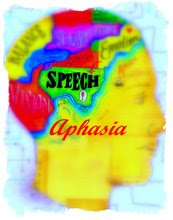
It is an interesting field in linguistics so I must try to deal with this issue. To conclude this entry I will include an image of the brain and its differents parts.


Wednesday, August 29, 2007

Sen. Tim Johnson second chance at life and work


Sen. Tim Johnson's Second Chance at Life and Work
Bob Woodruff Follows the Remarkable Recovery and Return of the South Dakota Senator
Senator Tim Johnson, who returned to South Dakota today for the first time since suffering a brain hemorrhage last December, says he plans to run for re-election in 2008. "I expect to run and to win," he said. (Office of Senator Tim Johnson)
From Nightline
By DAN MORRIS and JAIME HENNESSEYAug. 28, 2007


Sen. Tim Johnson, D-S.D., addressed a crowd today in Sioux Falls, S.D., "Wow. You guys are a sight for sore eyes. It's good to be home."
It's been a long road home for the senator in the eight months since the brain hemorrhage that nearly killed him in December. In that time he's had to learn to walk again and to cope with speech slowed by aphasia.
Related Stories

"I am back and I promise you all that I will work harder than ever for you and for our state," Johnson said.
One thing Johnson, who will return to the Senate on Sept. 5, hasn't lost is his sense of humor.
"I will promise you that when my speech is back to normal, I will not act like a typical politician and overuse the gift."
"Of course, I believe I have an unfair edge over most of my colleagues right now — my mind works faster than my mouth does," he said. "I'm hoping that folks will focus more on my work than how quickly I walk these days."
Johnson has always been a straightforward, moderate Democrat from a mostly Republican state. He is a man so respected by his colleagues that they made him chairman of the Senate Ethics Committee. He is also the only senator with a son who has served in Afghanistan and Iraq.
When Johnson fell ill with what appeared to be a stroke, the outpouring of concern from both sides of the aisle was heartfelt and genuine.
White House Press Secretary Tony Snow told reporters, "This is a time to pray for Tim Johnson's health, and I'll leave it to others to start doing political calculations."
Dec. 13, 2006
Shortly before noon on Dec. 13, 2006, Johnson was conducting a telephone news conference when his words began to falter.
"I looked at him and kind of gave him a sign like wrap it up. And he said, 'Frustrating.' He said frustrating, I think two times," Johnson's communications director Julianne Fisher said. "And I turned and looked at his scheduler and pulled her aside and said, 'I think he's having a stroke.' … By 12:15 he was probably in the ambulance and gone."
Johnson only recalls part of that day.
"I remember that time, and all the way to the emergency room— ambulance ride, the emergency room. And then I become vaguer. I don't remember anymore," he said.
Johnson was unaware that the scene outside George Washington Hospital quickly became a media circus, much to the dismay of his worried family and staff inside.