Diane Alter – AHN News Trivia Writer
Copengagen, Denmark (AHN) – A new Danish study says psoriasis may increase stroke risk.
A new study published online Aug. 12 in the European Heart Journal found that people who suffer with psoriasis had three times the increased risk of atrial fibrillation, and a 2.8 times increased risk for stroke. The findings add to the growing research linking the skin disorder with heart and vessel problems, including heart attack and cardiovascular disease.
Psoriasis is a skin condition that causes rough, red, itchy, dry and flaky skin. It is a common condition thought to be passed down through families, but is not contagious. It also causes inflammation in the body and may lead a host of other health related problems.
According to the National Psoriasis Foundation, about 7.5 million Americans, or 2.2 percent of the U.S. population, and 12 million people worldwide, suffer with this auto-immune skin disease.
Sunday, August 21, 2011
Psoriasis may increase stroke risk
The mother of missing estate agent Suzy Lamplugh has died aged 75
The mother of an estate agent who disappeared 24 years ago has died after a lengthy battle with Alzheimer’s disease.
Women's safety campaigner Diana Lamplugh OBE, of East Sheen, died in her sleep at the age of 75 yesterday, after suffering her second massive stroke in the past nine years.
Mrs Lamplugh’s daughter Suzy, who was living in Putney at the time of her disappearance, went missing in 1986 after going to meet a client for a house viewing. She was never seen again.
The traumatic event led parents Diana and Paul Lamplugh to establish the Suzy Lamplugh Trust, which made a name for itself as a national charity that championed the importance of personal safety.
Paul Infield, chairman of the charity’s board of trustees, paid tribute to the inspirational mother of four.
He said: “Diana was one of those people who contributed energy, focus and commitment to everything she did.
“With her husband, Paul, she was tireless in establishing, through the trust, the concept of and discipline for personal safety – now a household expression - as a positive life skill for people of all ages and occupations.
“Her message is as relevant today as when she started campaigning following Suzy's disappearance. While she will be sorely missed, the trustees and staff of the Trust are determined that our work will continue to fulfil Diana's vision of improving people’s personal safety.”
Before her illness Diana led the trust in campaigning for changes in law and procedures regarding safer working practices, safer travel in minicabs, and safer travel on trains and safer stations.
She also championed greater safety in car parks, stricter treatment and sentencing of sex offenders, better systems of helping vulnerable young people and victims of crime, protection from stalking and harassment, and changes in the treatment of young offenders.
For more information about the trust visit suzylamplugh.org.
Test for Calcium Buildup May Spot Heart Attack, Stroke Risk Scan may help predict which patients deemed at moderate risk would benefit from statins: study
THURSDAY, Aug. 18 (HealthDay News) -- A calcium test performed with the assistance of a CT scanner seems to provide insight into the likelihood that certain patients at moderate risk of heart problems will have a heart attack or stroke, researchers say.
Click here to find out more!
The test to detect coronary calcium can help physicians determine whether the patients should take cholesterol-lowering drugs to reduce their cardiovascular risks, the study authors explained.
At issue are people who fall into the middle area between those who are at high risk of heart problems due to factors like high blood pressure and those who are at low risk. People in the so-called "gray zone" may have risk factors, such as being overweight or having high blood sugar levels, but they aren't considered in great danger.
The question is: Should those in the middle range of risk -- an estimated 6 million people in the United States -- be prescribed the anticholesterol drugs known as statins, which often work well but have side effects?
The study, published in the Aug. 19 issue of The Lancet, sought to determine whether a test of calcium in the arteries is more helpful at estimating risk than a blood test that examines levels of C-reactive protein.
The researchers tracked 2,083 people for six years. They found that 13 percent of those with the highest levels of calcium in their arteries had a heart attack or stroke during that time period. But just 2 percent of those with high levels of C-reactive protein -- and no calcium buildup -- had a heart attack or stroke.
Not everyone needs a calcium test, said lead study author Dr. Michael J. Blaha, a cardiology fellow at the Johns Hopkins University School of Medicine. However, he stated in a Hopkins news release, "we believe looking for calcification in coronary vessels in certain patients makes sense in order to predict who may benefit from statin therapy, because the test gets right to the heart of the disease we want to treat."
"Our data support recent American Heart Association guidelines, which say it is reasonable to order a coronary calcium scan for adults who are considered to be at intermediate risk of a heart attack over the next 10 years. A high coronary calcium score would indicate that statin therapy would likely be a useful strategy to lower that person's cardiovascular risk," study co-investigator Dr. Roger Blumenthal, director of the Ciccarone Center for the Prevention of Heart Disease at Johns Hopkins University, said in the news release.
Commenting on the study, cardiologist Dr. Vijay Nambi, an assistant professor at Baylor College of Medicine, said that most insurance companies don't cover the calcium tests, which cost in the range of $200-$400. "Sometimes people have to pay for it out of pocket," said Nambi, who thinks it's a useful test. "It helps physicians in a lot of respects."
Test results can also help patients make decisions when they're worried about taking anticholesterol drugs, Nambi added. http://bit.ly/q8MtPP
Sunday, April 17, 2011
Memory Problems May Be Sign of Stroke Risk
Memory Problems May Be Sign of Stroke Risk
TEHRAN (FNA)- Findings of a new study showed that people who have memory problems or other declines in their mental abilities may be at higher risk for stroke.
The study is scheduled to be presented at the American Academy of Neurology's 63rd Annual Meeting in Honolulu April 9 to April 16, 2011.
"Finding ways to prevent stroke and identify people at risk for stroke are important public health problems," said study author Abraham J. Letter of the University of Alabama at Birmingham.
"This study shows we might get a better idea of who is at high risk of stroke by including a couple simple tests when we are evaluating people who already have some stroke risk," Letter added.
For the study, researchers gave tests to people age 45 and older who had never had a stroke, then contacted them twice a year by phone for up to 4.5 years to determine whether they had suffered a stroke.
The average age of the participants was 67. Strokes were then confirmed by medical records. A total of 14,842 people took a verbal fluency test, measuring the brain's executive functioning skills, and 17,851 people took a word recall memory test.
The study was part of a larger study called the REasons for Geographic and Racial Differences in Stroke (REGARDS) study. During the study, 123 participants who had taken the verbal fluency test and 129 participants who had taken the memory test experienced a stroke.
Those who scored in the bottom 20 percent for verbal fluency were 3.6 times more likely to develop a stroke than those who scored in the top 20 percent. For the memory test, those who scored in the bottom 20 percent were 3.5 times more likely to have a stroke than those in the top 20 percent.
The difference in stroke incidence rates between those with the bottom and top 20 percent of scores was 3.3 strokes per thousand person-years. In general, the differences remained after researchers adjusted for age, education, race and where participants lived.
At age 50, those who scored in the bottom 20 percent of the memory test were 9.4 times more likely to later have a stroke than those in the top 20 percent, but the difference was not as large at older ages. more read...
Fighting heart disease and stroke
Liverpool, NY (WSYR-TV) The American Heart Association held its annual Heart Walk Saturday at Long Branch Park in Liverpool.
The walk raises money for lifesaving research, programs and education, while celebrating survivors of heart attack, heart surgery and stroke.
About 5,000 people took up the cause.
"Well it's encouraging to see this and there is certainly a need for this kind of event to support the cause and to make sure this is top most in people's minds,” said AHA volunteer James Jerose.
more read...
Klein could live with dementia for years, says exper
Klein could live with dementia for years, says expert
Click here to watch the video
- Former Alberta Premier Ralph Klein is suffering from a form of frontal temporal dementia.
- Play Video
Klein falls within the normal age bracket for the disease, said Price, and people diagnosed with this form of aphasia usually live an average of five to seven years, said Sarah Price, director of dementia care with the Alzheimer Society of Calgary.
“But we know people can live 20 years with Alzheimer’s Disease so it really has a lot to do with the individual themselves,” said Price.
“Their health and how much of the brain is affected, it’s all very individualized."
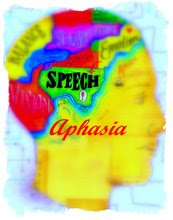
Klein, 68, was diagnosed April 1 with primary progressive aphasia, a form of frontal temporal dementia.
“What that means is the two regions of the brain that are primarily responsible for language, some memory and sort of how we behave in society are affected,” said Pirce.
“With this particular diagnosis, aphasia means language, the ability to understand, comprehend and articulate ourselves.
“Over time, because it’s a progressive type of dementia, other aspects will become affected that are more commonly known, like memory loss and the abilities to walk and ambulate fluently.”
Progression of frontal temporal lobe dementia is typically slow, said Price.
“Often times with any type of dementia, it’s been progressing for a couple of years until the point that the family says, ‘you know what, something is wrong.’”
About 12,000 Calgarians suffer from dementia and warning signs are often overlooked or not immediately recognized, said Price.
“You’re looking for something vastly different than someone’s normal behaviour or way of doing things,” she said.
“With the language, you’re looking for those word finding difficulties.”
dave.dormer@sunmedia.ca
Ten warning signs of dementia:
1 Memory loss that affects day-to-day function
2 Difficulty performing familiar tasks
3 Problems with language
4 Disorientation of time and place
5 Poor or decreased judgement
6 Problems with abstract thinking
7 Misplacing things
8 Changes in mood or behaviour
9 Changes in personality
10 Loss of initiative
— source: Alzheimer Society of Calgary
more read...
Mobile app MyVoice reportedly benefits people with communication challenges
“This is an excellent example of how university research makes a direct and positive impact on the challenges that face people around the world. MyVoice is just one of the many projects our Innovations and Partnerships Office is developing with U of T faculty so we can move our brilliant research from our campuses to the global marketplace,” Professor Paul Young, vice-president (research).
The mobile app MyVoice is funded by Google, Android and more read...